Real Pool 3D
- 4.4
- Rating
- 5.00M
- Installs
- Free
- Price

 Analysis by App-foxy
I spent time with Real Pool 3D as a casual sports game, and my first impression was that it understands why mobile billiards works: a quick table, a simple aiming gesture, and enough control to make a clean shot feel earned. It is free to play, aimed at Everyone, and comes from EivaaGames, so it is easy to approach whether you already know pool or simply want something to occupy a few spare minutes.
The important distinction is that this is not trying to replace a full physical pool simulator. It is better viewed as a compact digital table for short sessions, friendly matches, and practice against computer-controlled opponents. That focus makes it convenient, although players looking for a deep competitive ecosystem or a highly technical simulation may eventually notice its limits.
How Real Pool 3D feels today
The current version is 3.29, and the game has been available since September 21, 2016. That history matters because the experience feels established rather than experimental. I did not approach it as a brand-new release with an untested control scheme; I approached it as a mature mobile pool game that has had time to settle into its basic formula.
You May Also Like

 Google Keep - Notes and lists
Google Keep’s Quiet Growth Shows the Appeal of Simpler Notes
As mobile work gets busier, Google Keep keeps winning a simple contest: capture a thought quickly, find it later, and get on with the day.

 Blood Strike: 2.5 Anniversary
Blood Strike’s Loadouts Turn Every Drop Into a Tactical Gamble
A close look at Blood Strike’s custom loadouts: how fast access to signature weapons reshapes its battle royale rhythm, rewards preparation, and narrows the gap between fights.

 Pandora - Music & Podcasts
Pandora’s Music Is Easy to Start, but Harder to Recover
Pandora’s strength is its low-effort path from a seed to a station. Its weak spot is how much confidence it asks you to place in connection, setup, and quiet recovery.

 8 Ball Pool
 Is Built on Rivalries, Rematches, and Routine
A close look at the rivalries, rematches, shared routines, and unanswered safety questions that turn a quick pool match into a persistent mobile community.

 Samsung Music
’s Quiet Strength Is Playing What You Already Own
Its reach comes less from spectacle than from dependable access to a personal library. That simplicity is both the app’s strongest retention engine and its ceiling.

 AccuWeather: Weather Radar
AccuWeather Review: A Quick, Clear Forecast for Everyday Decisions
For everyday plans, the best forecast is the one you can understand quickly. AccuWeather makes rain timing, radar, and local conditions easy to act on, with a few trade-offs.
More From Our News Desk



Its popularity also gives a useful sense of context. The game has passed 5 million installs, with an average rating of 4.4 from roughly 56 thousand ratings and about 4.2 thousand written reviews. Those figures do not guarantee that every player will enjoy it, but they do suggest that the straightforward table-and-shot format has connected with a large audience.
Starting a match is uncomplicated. The appeal is in lining up the cue, judging the angle, and deciding how much force to use rather than navigating a crowded menu or learning a long list of special abilities. I found that simplicity particularly useful when I wanted a game I could open, play a few turns, and put away without losing track of a complicated campaign.
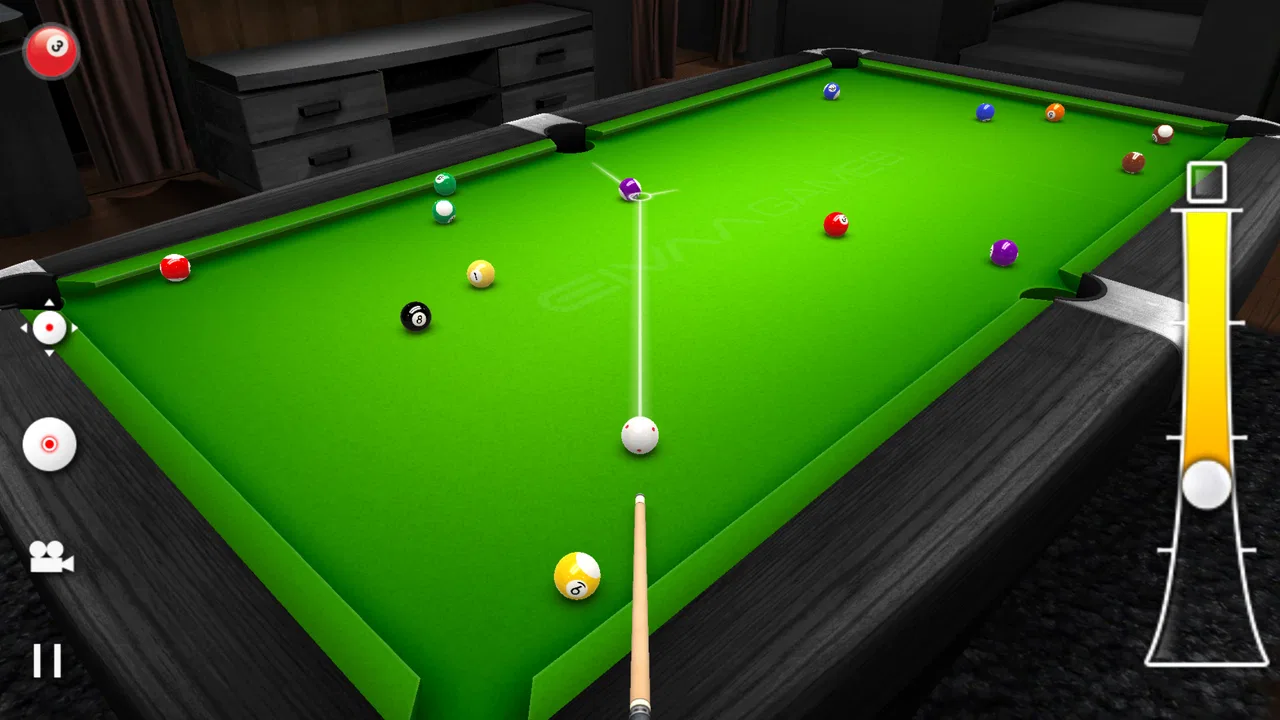
The three-dimensional presentation helps the table feel more readable than a flat puzzle board. You can concentrate on the relationship between the cue ball, the target ball, and the pocket. That visual clarity is important on a phone, where small controls can otherwise make precision frustrating.
Still, the game asks for patience during the first few matches. A shot that looks obvious at a glance can fail because the angle is slightly wrong or the power is too strong. My advice is to begin with gentle strokes and use early turns to learn how the aiming line responds. Trying to play every shot at maximum force is a quick way to lose control of the table.
Controls that reward restraint
The strongest part of the experience is the basic shooting loop. I generally had a better result when I treated each shot as two separate decisions: first choose the direction, then adjust the strength. That sounds simple, but separating those choices prevents the common mobile mistake of dragging too quickly and accepting an inaccurate line.
A practical technique is to plan the next position before taking the current shot. Potting a ball is not always the best outcome if the cue ball finishes against a cushion or leaves an awkward angle. The game becomes more interesting when I try to leave the cue ball in a useful area instead of focusing only on the immediate pocket.
This is also where the title works better for experienced pool players than for people who only want instant arcade action. The controls are accessible, but good results still depend on reading angles and moderating force. I would not call the learning curve severe, yet it is enough to give careful players something to improve.
Playing alone and playing with friends
The computer opponents make the game suitable for solo sessions. I like this option when I have no one available for a match or when I want to practice without the pressure of playing against another person. It also provides a reliable way to test a new approach, such as using softer shots or planning position more deliberately.
Playing against friends changes the mood. A local match can turn a quiet break into a small competition, especially when both players are willing to take the game seriously. The appeal is not built around a large social system; it is the simple pleasure of handing over the device or arranging a quick contest with someone you know.
That simplicity can be a strength and a weakness. If you want a focused billiards session, it keeps distractions away. If you expect tournaments, extensive rankings, or a large community layer, this is not the kind of experience I would choose first. A more feature-heavy pool game may be a better fit for players who want progression systems surrounding every match.
What the long-running version means for players
Because version 3.29 follows a release history that began in 2016, I see the product as a maintained, familiar game rather than a title built around constant reinvention. The verified version and release details show how long the core idea has been present, but they do not justify assuming that every update introduced a particular feature. I would judge it by the current table experience, not by promises about future changes.
For an existing player, that continuity is reassuring. Someone who enjoyed the central controls years ago can return without expecting the identity of the game to have completely changed. The basic appeal remains recognizable: choose a shot, control the cue, and try to clear the table more effectively than the opponent.
For a new player, the age of the game has a different implication. It may feel less aggressively designed than newer sports titles that surround matches with elaborate reward tracks, seasonal content, or highly animated presentation. I personally prefer the quieter approach for short sessions, but players who need a constant stream of unlocks could find it modest.
The game is available free of charge, while in-app purchases are listed at $2.99 per item. That makes trying it low risk, but I still recommend deciding in advance whether you want to spend anything. The core test is simple: if the table, controls, and opponent behavior are enjoyable without paying, the game has already done its main job. Do not treat an optional purchase as a solution for a control style you do not like.
Since the content rating is Everyone, it is an approachable choice for a broad audience. That does not mean every child will find precision aiming easy, but it does make the game more suitable for shared family play than a sports title built around mature themes. I would still explain the purchase system before handing a device to a younger player, particularly if the device allows purchases without an extra check.
Small habits that improve a match
One of the most useful workflows I found was to use solo play as a laboratory rather than merely as a way to pass time. I would deliberately choose safer shots, watch where the cue ball stopped, and then repeat the same kind of decision in a friend match. This turns a casual game into a light practice tool without requiring a formal training mode.
Another worthwhile habit is to avoid aiming only at the center of the pocket. When the table position allows it, I try to send the target ball along a line that leaves the cue ball with a manageable next shot. This is a subtle change, but it gives the game more depth than simply pointing at the nearest opening.
I also found it helpful to treat difficult shots as risk decisions. If a low-percentage attempt could leave the opponent an easy table, a defensive or safer option may be smarter. The game does not need a complicated rule system to create this tension; the arrangement of the balls is enough. Players who approach every turn as a race to pocket something may miss one of the more satisfying parts of the experience.
Finally, short sessions work better than forcing a long run. Precision can become tiring on a phone, especially when the device is held in one hand or the screen is small. I get more enjoyment by playing a few focused games, taking a break, and returning later than by continuing after my aim has become careless.
Where it falls short
The same minimalism that makes the game approachable can make it feel limited beside larger sports games. I would not install it expecting a full career mode, a broad collection of billiards disciplines, or a deep competitive structure. Its strongest promise is the table itself, and that is also where most of the value ends.
There is also a difference between visual realism and physical realism. A three-dimensional table can look convincing while still feeling simplified compared with playing on a real table. Real-world pool includes cloth speed, subtle contact behavior, body positioning, and the tactile feedback of the cue. A phone screen cannot reproduce all of that, so players seeking serious training should use this as a way to think about angles, not as a substitute for physical practice.
Control sensitivity may be another dividing line. I found the system manageable once I slowed down, but anyone who dislikes touch aiming may become irritated by near-misses. A controller-focused sports game or a title with more generous assist options could be preferable for someone who wants immediate, forgiving action.
The purchase structure is worth keeping in mind as well. The game is free to start, but the presence of $2.99 items means the experience is not identical to buying a single premium game upfront. I prefer to evaluate the free portion first and avoid spending simply because I have already invested time. That approach keeps the decision based on enjoyment rather than momentum.
Players who need a strong online community should also compare alternatives before settling here. Real Pool 3D suits a private match with friends and solo play against AI players, but a different billiards game may be more appropriate if live competition, rankings, or a constantly changing social environment is the main reason for installing.
Who should install it
I recommend it to someone who wants a recognizable pool experience that starts quickly and does not demand a large time commitment. It is especially suitable for a person who enjoys improving through repetition: adjusting power, reading angles, and learning to leave the cue ball in a useful position.
It also works well in an everyday situation where a more involved game would be inconvenient. For example, I can imagine using it during a short commute break or while waiting for an appointment. One or two turns are enough to engage with the table, and a complete session does not require the kind of uninterrupted attention demanded by a long adventure or strategy game.
Friends who already enjoy billiards may get more from it than complete beginners because they will recognize why position matters. Beginners can still enjoy it, but I would encourage them not to judge the game after a handful of missed shots. The satisfying part arrives when the controls stop feeling like guesswork and start feeling like a set of choices.
I would skip it if your priority is a realistic substitute for a pool hall, an extensive progression system, or a highly social competitive platform. I would also skip it if you want a game that plays itself through flashy effects. This is a hands-on aiming game, and its enjoyment depends on your willingness to take responsibility for each shot.
What I would watch going forward
The most important thing to watch is whether future development continues to protect the clean table experience. Since the current version is 3.29 and the game has been around for years, I would value improvements that make aiming clearer, keep touch response dependable, and preserve quick access to matches rather than adding clutter for its own sake.
I would also pay attention to how the game balances accessibility with challenge. New players need enough clarity to understand why a shot missed, while experienced players need enough control to feel that careful planning matters. If either side is neglected, the game could become either too forgiving or unnecessarily frustrating.
Another sensible area to monitor is the relationship between the free experience and the $2.99 purchase items. The best version of this game is one where players can decide about spending after discovering whether they enjoy the table. Clear separation between optional purchases and the basic pleasure of playing would help preserve trust.
My final view is positive but specific. Real Pool 3D is at its best as a focused, free mobile billiards game: easy to start, rewarding when I control my power, and flexible enough for solo practice or a friendly match. It is not the right answer for every sports-game fan, but if you want a compact digital pool table rather than a giant progression-heavy package, EivaaGames has built a dependable option that remains worth trying.
FAQs for Real Pool 3D
01What is Real Pool 3D, and what can I do in the game?
Real Pool 3D is a mobile billiards game focused on realistic pool tables, physics, and familiar cue-sports rules. During my time with it, I found that it is mainly designed for quick matches, practice sessions, and competitive play against computer-controlled opponents or other players, depending on the available mode. It is suitable for casual users who want a pool game that is easy to start but still rewards accurate aiming, controlled power, and careful positioning.
02Is Real Pool 3D free to download and play?
Real Pool 3D can generally be downloaded without an upfront purchase, but the exact monetization options may vary by platform and version. Players should check the store listing before installing because the game may include advertisements, optional in-app purchases, or unlockable content. The basic experience is usually accessible for free, although some features, tables, cues, or customization options may require additional progress or payment.
03Does Real Pool 3D support offline play?
Real Pool 3D may allow users to enjoy certain single-player or practice features without a constant internet connection, which is useful when traveling or playing with limited data. However, online multiplayer, advertisements, account features, leaderboards, and some updates normally require an active connection. Because offline availability can differ between versions, I recommend testing the game after installation and reviewing its permissions and store description.
04Is Real Pool 3D suitable for beginners?
Yes, Real Pool 3D is generally approachable for beginners because its controls are based on familiar touch gestures and straightforward aiming mechanics. New players can learn by adjusting the cue direction, selecting shot strength, and observing how the ball reacts after contact. The realistic physics may require practice, especially when applying spin or planning several shots ahead, but the learning curve feels manageable for anyone familiar with basic pool rules.
05What should I know about the controls and performance before downloading?
The game relies heavily on touch controls, so the quality of your experience depends on how precisely your device responds to swipes and taps. On a modern Android or iOS phone or tablet, the 3D presentation and table physics should feel smooth, while older devices may experience reduced frame rates or longer loading times. Make sure your device has enough free storage, install updates when available, and use a stable connection for online features.
Pros
- Realistic 3D physics make shots feel authentic and satisfying.
- Multiple table styles and environments add visual variety.
- Offline play lets you enjoy matches without an internet connection.
- Simple controls are easy for beginners to learn quickly.
- Short matches work well for casual gaming sessions.
Cons
- Some advanced tables or cues may require in-app purchases.
- Ads can interrupt the experience between matches.
- Computer opponents may feel predictable after extended play.
- Limited customization may disappoint dedicated pool fans.
- Performance can vary on older phones or tablets.

Real Pool 3D
Gallery